National Assembly Staff Receive Training to Support Blind and Visually Impaired Visitors


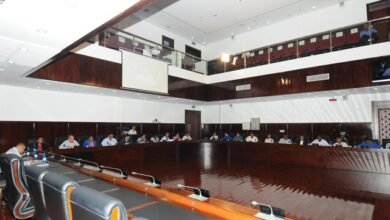
VICTORIA, Seychelles — Parliamentary service staff at the National Assembly of Seychelles completed a specialised training session on ‘Guiding the Blind and Visually Impaired’ on Thursday May 14, designed to create a more accessible, safe, and inclusive parliamentary environment for citizens with disabilities. The training was organised in collaboration with the Seychelles Association of the Blind and Visually Impaired and led by Edward Mullen, joined by Sabvi chairperson Rosabel Hoareau and Norris Crouse. More than 12 staff members participated in interactive activities designed to deepen their understanding of the challenges faced by blind and visually impaired individuals while learning practical techniques for guiding them safely around the parliamentary building and public galleries.
For Seychellois citizens with visual impairments, accessibility barriers in public institutions can limit participation in democratic processes and civic life. The National Assembly training represents a concrete step toward removing those barriers, ensuring that Parliament is not merely a symbol of democracy but an institution that is genuinely accessible to all citizens regardless of physical ability. Practical skills for guiding blind visitors safely through the parliamentary complex translate directly into more inclusive public engagement and greater confidence for visually impaired individuals who wish to observe or participate in legislative proceedings.
The specialised training is a key component of the broader ‘A Parliament for All’ project, funded through the Commonwealth Parliamentary Association’s Capital Investment Fund for Commonwealth Parliamentarians with Disabilities, according to a press release from the National Assembly. The project aligns with Component One of the programme, which focuses on disability awareness and sensitivity training for both parliamentary staff and members of Parliament. Mullen highlighted that blindness and serious visual impairment affect around 300 Seychellois, underscoring the importance of such training for public institutions that serve the entire population.
The Commonwealth-funded project will also include further awareness and training sessions, ensuring that staff involved in outreach and parliamentary tours are equipped to assist differently-abled groups. This will extend to specialised online training on disability awareness and health and safety, enabling more inclusive risk assessments and improvements for members, staff, and visitors. Through initiatives like this, the National Assembly continues its proactive journey toward becoming a more democratically inclusive institution that reflects the full diversity of Seychellois society.
The training session involved practical exercises that allowed parliamentary staff to experience the challenges of navigating spaces without full vision, building empathy alongside technical skills. The commitment to ongoing training and the integration of accessibility considerations into risk assessments and facility planning indicates that accessibility is being treated as a continuous priority rather than a one-time compliance exercise. Open dialogue with both Sabvi and parliamentary leadership will continue to guide the institution’s work in formulating policies to address accessibility at the national level.
The National Assembly stated that it remains committed to ensuring that Parliament serves all citizens, with further training sessions planned to expand disability awareness across the institution.