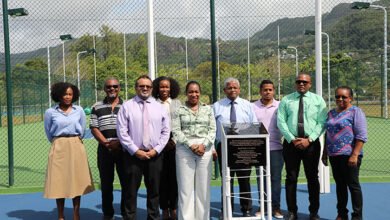
VICTORIA, Seychelles — The Citizens Engagement Platform Seychelles (Ceps) wrapped a practical first aid training session for representatives of non-governmental organisations this week, the latest in a year-long programme designed to make civil society a working partner in disaster preparedness and anticipatory action rather than a passive bystander.
The training drew on a curriculum that the Red Cross Society of Seychelles has run for years with the Ministry of Local Government and Community Affairs under the “Save A Life” banner. That programme, launched in May 2024 at the RCSS headquarters in Mont Fleuri, is the country’s most accessible one-day first aid certification and is the basis on which district brigade team leaders are routinely refreshed on CPR and rapid situational assessment, according to the Red Cross Society of Seychelles. The certification carries a two-year validity and feeds directly into community-level emergency response.
Ceps has built the training offer into a broader gender mainstreaming and disaster preparedness workstream under its Critical Ecosystem Partnership Fund (CEPF) project, which also runs bookkeeping training for civil society organisations and a Beneficial Ownership Clinic held jointly with the Financial Intelligence Unit. The May 2026 clinic, for example, brought FIU officers to the Ceps conference room to guide NGO representatives on transparency obligations, a routine the organisation describes as part of its continuous engagement on disaster risk reduction. Ceps itself is the third pillar of national development, alongside government and the private sector, a positioning it reaffirmed in its 50th independence message this year.
The technical content aligns with the psychological first aid model used by the Red Cross and Red Crescent movement worldwide. Participants are trained to “look, listen and link” — to establish human connections in a non-intrusive and compassionate manner, to enhance immediate and ongoing safety, to calm and orient emotionally overwhelmed survivors, to help affected people verbalise their immediate needs and to connect them to social support networks including family, friends, neighbours and community resources, according to the RCSS psychological first aid training outline. The methodology follows the Red Cross Fundamental Principles of humanity, impartiality, neutrality, independence, voluntary service, unity and universality, and is delivered in a semi-circle seating arrangement of no more than 20 participants per training.
The practical first aid module that complements this psychological framework is structured around the same first responder approach. Volunteers and staff at the RCSS undergo a four-day practical first aid course at the La Ciotat headquarters in Mont Fleuri, where the health coordinator, who is also a first aid instructor, leads the session assisted by the secretary general of the national society, the Red Cross Society of Seychelles confirmed. The first aid component covers CPR, bleeding control, fracture management, recovery position and the safe handling of cardiac and respiratory emergencies, with new volunteers required to complete the course before being deployed.
The Seychelles chapter has been one of the more active national societies in the Indian Ocean on this front. In 2023 the RCSS ran 62 first aid training sessions across Mahé and Praslin, producing 545 qualified first aiders, and also provided psychological first aid training to 12 police officers at the Police Academy in Pointe Larue, according to the International Federation of Red Cross and Red Crescent Societies country report for Seychelles and Mauritius. The same year the National Society developed a strategic plan to expand first aid provision for traffic accidents, training traffic police officers and conducting awareness sessions in partnership with the Ministry of Health’s Blood Transfusion Unit and the Seychelles Civil Aviation Authority.
The wider disaster preparedness architecture in Seychelles includes the Department of Risk and Disaster Management, which the IFRC describes as “a relatively strong Department of Risk and Disaster Management (DRDM) as part of the disaster response”, with structured and periodic capacity building in disaster preparedness that complements civil society efforts. Ceps’ practical first aid training for NGO representatives is intended to fill the last-mile gap between formal state-led response and the communities in which civil society organisations already work.
Sources cited: 1. Red Cross Society of Seychelles, “Practical First Aid training for RCSS volunteers and staff”,