Vice-President Pillay Challenges Africa to Seize Ocean Wealth and Build Blue Economy Governance

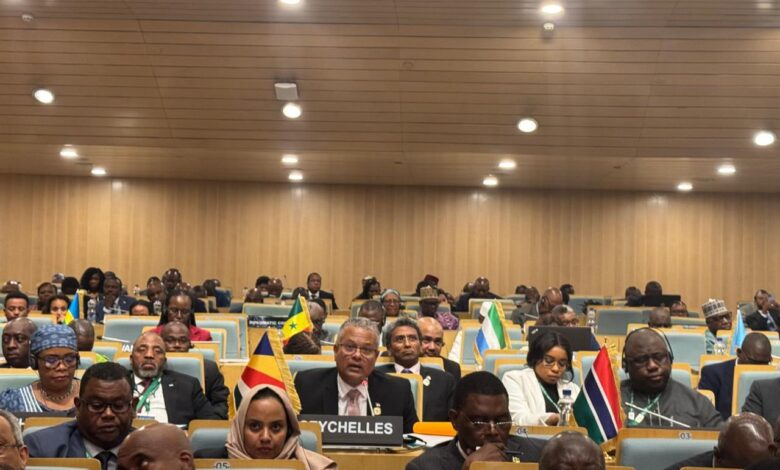
VICTORIA, Seychelles — Vice-President Sebastian Pillay challenged African leaders to move beyond the export of raw materials and build the governance structures, industries, and financing systems needed to make the Blue Economy a continental reality, speaking at the Roundtable on the Blue Economy during the Africa Forward Summit 2026 held in Nairobi, Kenya. Pillay described Africa’s oceans as holding an estimated one trillion dollars in untapped potential that for most of the continent remains just out of reach, and identified illegal, unreported, and unregulated fishing as one of the most immediate obstacles draining resources before they can ever be developed. He called for dedicated blue finance mechanisms and the reallocation of Special Drawing Rights to translate ambition into concrete economic outcomes.
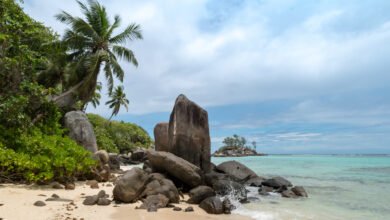
The intervention carries particular weight coming from Seychelles, a small island nation that has placed its maritime territory at the heart of its development model. With 30 percent of its marine territory now under protection, Seychelles offers a replicable model for the continent, demonstrating that conservation and economic development are not mutually exclusive but rather mutually reinforcing goals. Vice-President Pillay’s call to action at a major African summit reinforces Seychelles’ role as a thought leader on ocean governance, blue economy policy, and climate-aligned maritime development within the African Union framework.
Pillay set out three priorities he described as non-negotiable for any serious continental blue economy strategy, according to a State House press release. The first was the creation of blue jobs and inclusive value chains, ensuring that growth from ocean resources leaves no coastal community behind. The second was the development of African-led ocean data systems to reclaim the data sovereignty needed to manage marine resources effectively rather than relying on external data providers. The third was investment in low-carbon maritime infrastructure through a just transition that does not ask the most vulnerable nations and communities to bear the heaviest costs of decarbonisation.
The roundtable session carried significant international weight, with France’s Minister for the Sea and Fisheries Catherine Chabaud among those in attendance, and the panel’s closing consensus aligned squarely with the summit’s mission of sustainable growth and strategic partnership. Pillay noted pointedly that the Blue Economy must be economically viable and environmentally responsible, a formulation that captures both the opportunity before African governments and the obligation to manage ocean resources sustainably for future generations. The session reflected a growing continental consensus that Africa’s ocean future cannot be deferred indefinitely given the accelerating pressures of climate change and overfishing.
Seychelles’ own experience provides concrete evidence for the vice-president’s argument. The country’s shift toward marine conservation combined with a high-value, low-volume tourism model has generated significant returns while preserving the ecological foundations on which that economy depends. Other African coastal nations and small island developing states are watching this model closely as they weigh their own approaches to blue economy development, particularly regarding the financing mechanisms that Pillay identified as the critical missing link.
The summit outcomes underscored that Africa’s window to shape its ocean future is open, but will not remain so indefinitely without determined political and financial commitment from governments across the continent.