Cabinet Approves Air Seychelles Fleet Strategy Film Rebate Scheme and Sweeping Legal Reforms

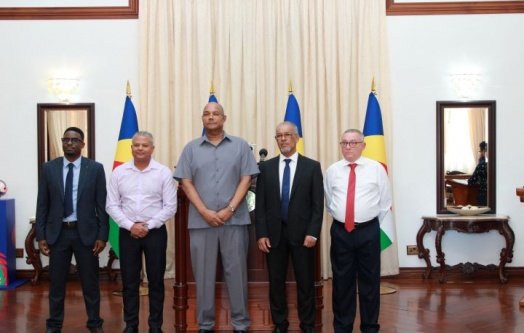
VICTORIA, Seychelles — President Patrick Herminie chaired a Cabinet meeting on Wednesday May 13 at which ministers approved a broad programme of policy measures spanning aviation, the creative economy, judicial modernisation, heritage protection, social welfare, and public service delivery, with the approval of an International Long-Haul Fleet Strategy for Air Seychelles and a National Film Rebate Scheme among the most economically significant decisions. The Air Seychelles strategy authorises the lease of two Airbus A321 XLR aircraft as the preferred solution for long-haul expansion, a choice the Cabinet endorsed on the basis of its projected profitability, operational efficiency, and alignment with the airline’s existing fleet. The Cabinet also approved the development and implementation of a National Film Rebate Scheme designed to attract international and regional film productions, stimulate investment, and support the growth of the local creative industry.
The Air Seychelles long-haul fleet decision carries direct economic significance for a country that depends heavily on long-haul tourism markets for its foreign exchange earnings and overall economic health. The A321 XLR, with its extended range capability, would allow Air Seychelles to operate direct routes to key source markets without the payload limitations that constrain current aircraft options. Expanding long-haul capacity is widely regarded as essential if Seychelles is to grow visitor numbers and diversify its source markets beyond traditional European strongholds. The film rebate scheme, meanwhile, reflects a broader government strategy to develop high-value economic sectors that complement tourism while creating skilled employment.
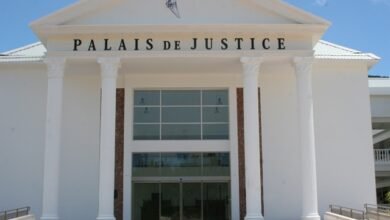
On judicial modernisation, the Cabinet approved a Digitalisation Programme for the Judiciary that includes the Electronic Case Management System and the Legal Information and Judicial Decision Publishing System, known as LexVue, according to the State House press release. The programme is intended to support digital transformation of court operations through better case management, electronic filing, digitisation of judicial records, improved publication of judgments and legislation, and stronger cybersecurity. Cabinet also approved the Seychelles Law Commission’s Work Programme for 2026, which covers reforms to the Criminal Procedure Code, Evidence Act, Legal Aid Act, Notaries Act, Civil Code, Legal Practitioners Act, and legislation relating to the Judiciary. The National Monuments Bill was approved to replace the outdated 1980 Act, introducing enhanced governance of the National Monuments Board, stronger enforcement mechanisms, and provisions for the adaptive reuse of heritage sites.
In the area of social policy, Cabinet approved a memorandum of understanding between the Ministry of Social Affairs, Family and Equality and Elles Foundation to support programmes aimed at reducing teenage pregnancy and strengthening assistance to teenage mothers in Seychelles, with grant funding of R600,000 for 2026. Cabinet also approved revisions to the Seed Capital Grant Scheme to strengthen implementation, transparency, and effectiveness for start-ups and entrepreneurs, including revised eligibility provisions and a clearer definition for youth beneficiaries. The establishment of a Government Service Centre providing integrated one-stop physical and digital services was also approved as part of efforts to modernise public service delivery and improve ease of doing business in Seychelles.
The breadth of the policy programme approved at a single Cabinet meeting reflects the pace at which the current administration is seeking to advance structural reform across multiple sectors simultaneously. Critics may question whether the institutional capacity exists to implement so many parallel reform programmes effectively, particularly in areas such as judicial digitalisation and monument management, which require sustained funding and specialist expertise. The decision to coordinate relevant agencies on the development of a Coetivy alternate airport adds an infrastructure dimension to a wide-ranging agenda that already encompasses aviation, justice, culture, and social protection.
The full implementation of these measures is expected to unfold across 2026 and beyond, with the judiciary digitalisation programme and the film rebate scheme both requiring dedicated working groups to develop the necessary policy and operational frameworks before they can take effect.