Seychelles Revenue Commission Cannot Verify Its Own Fuel Tax Figures as FPAC Hearings Reveal Systemic Weaknesses

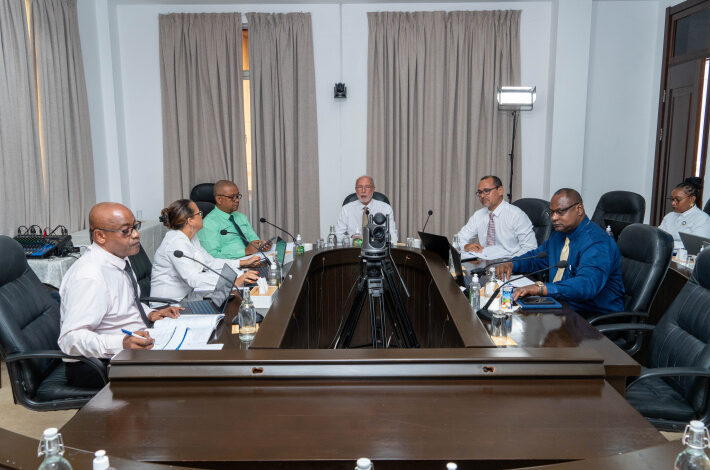
Victoria, Seychelles – The Finance and Public Accounts Committee continued its examination of the Auditor General’s 2024 report yesterday, with the Seychelles Revenue Commission and the Seychelles Infrastructure Agency both facing pointed questioning over findings that raise serious concerns about revenue oversight and public project delivery.
On fuel tax, the committee heard that the SRC calculates fuel tax assessments based solely on data provided by the Seychelles Petroleum Company – without any independent third-party verification. Auditors also found discrepancies between fuel volumes recorded on bills of entry and bills of lading, with no formal procedures in place to investigate or reconcile those differences. In plain terms, the state cannot independently verify how much fuel it is taxing – and has no process to question the figures it receives.
Officials said discussions are ongoing at Ministry of Finance level to establish a clearer framework. That these discussions are still ongoing, years into the relationship with the only major fuel supplier in the country, is itself a governance concern that the committee did not appear to let pass without challenge.
On overall revenue, the SRC collected R2.70 billion in 2024 against a revised budget estimate of R2.80 billion – a shortfall of R82.31 million or 3%. Officials attributed underperformance in customs revenue to the December 2023 disasters, shipping delays, and port congestion caused by cruise ship prioritisation in December 2024. While these are legitimate factors, the committee also noted that levies collected by the SRC had previously been combined with those of the Seychelles Licensing Authority into a single forecast line – making it impossible to fully assess either agency’s performance separately. This has apparently been in practice for years, with discussions to separate the figures only now agreed for 2026 onwards.
On tourism levy compliance, seven out of 559 registered businesses had failed to submit required declarations despite being listed as active. On VAT, a manual backup system remains in place while historical data is being migrated, with a backlog from 2023 and 2024 expected to be cleared only by the end of 2026.
The Seychelles Infrastructure Agency presented its own set of concerns. The agency, established only around a year and a half ago, acknowledged that 79 of 170 planned project budget lines were unimplemented during 2024. Of R942 million under SIA control, a significant portion went unspent – not because of overspending, officials clarified, but because of project delays, revised cost estimates, and way-leave disputes with sitting tenants. In 18 cases, contracted values exceeded original budget provisions by R107 million, resulting in total contract values of R188.8 million against an initial allocation of R81.7 million. The committee was also told that in some cases, ministries had approved projects without prior consultation with the SIA, creating cost overruns after detailed design work revealed the true scope.
The picture that emerges across multiple weeks of FPAC hearings is one of a public sector operating with inadequate systems, insufficient verification, and chronic coordination failures. These are not isolated incidents. They are patterns. And the pattern costs Seychellois taxpayers money that is either not collected, not verified, or not efficiently spent.