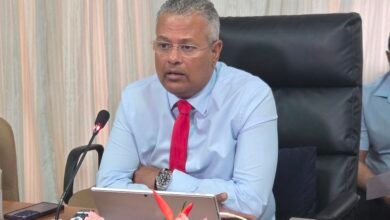
Seychelles Strengthens Commitment to Ozone Protection at Montreal Protocol Meeting in Bangkok

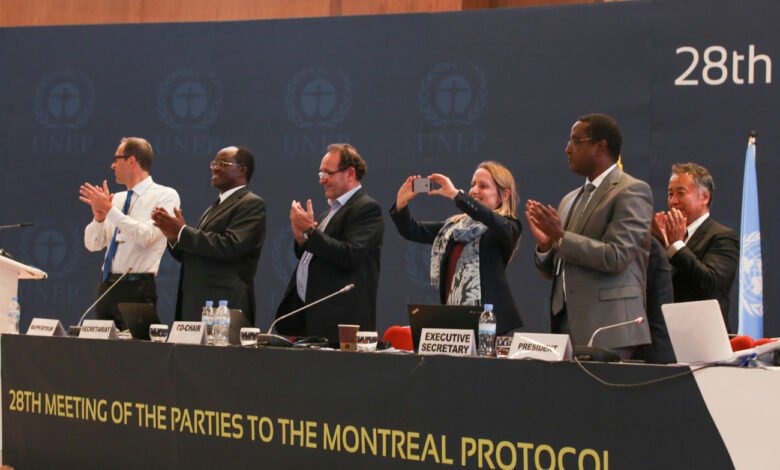
📷 Photo: UN Environment Programme (UNEP) / 28th Meeting of the Parties to the Montreal Protocol, Kigali, via ozone.unep.org
BANGKOK, Thailand — A Seychelles delegation joined representatives of more than 130 parties in Bangkok from 13 to 18 July for the 48th Open-ended Working Group of the Parties to the Montreal Protocol (OEWG48), reaffirming the country’s commitment to protecting the Earth’s ozone layer.
The Seychelles delegation, led by the Ministry of Environment, Climate, Energy and Natural Resources, also attended the Sixth Extraordinary Meeting of the Parties (ExMOP6) and the 76th Implementation Committee Meeting (ImpCom76), held alongside the working group.
Discussions at the three meetings focused on strengthening implementation of the Montreal Protocol, addressing illegal trade in controlled substances, enhancing atmospheric monitoring, and ensuring the long-term sustainability of the regime, including its financing and operations.
The Montreal Protocol, adopted in 1987, is the landmark international agreement that has phased out more than 99 percent of the ozone-depleting substances once widely used in refrigeration, air-conditioning and foam products. Its success is widely regarded as the model for global environmental cooperation, and the United Nations Environment Programme credits it with allowing the ozone layer to begin healing.
For small island states such as Seychelles, the stakes of illegal trade and non-compliance are particularly high. The country’s reliance on imported refrigeration equipment, both for tourism and for fisheries, makes it especially exposed to the entry of substandard or banned substances. The Seychelles delegation used the Bangkok meetings to exchange experiences with other small-island developing states on how to strengthen customs controls, licensing regimes and reporting.
The meetings also provided a venue to discuss the Protocol’s Kigali Amendment, which extends the phase-down obligations to hydrofluorocarbons (HFCs) — a set of greenhouse gases used as replacements for older ozone-depleting substances. Although HFCs do not deplete the ozone layer, many are potent climate-warming agents, and controlling them under the Montreal Protocol is now seen as one of the most cost-effective climate actions available to developing countries.
The Seychelles delegation’s principal secretary and chief project coordinator Cindy Clair said the country remained committed to working with international partners to support the phase-down of HFCs, expand training for refrigeration and air-conditioning technicians, and ensure that the transition to low-global-warming-potential alternatives does not come at the expense of energy efficiency.
The meetings concluded with a series of decisions referred to the upcoming Meeting of the Parties, scheduled to be held later in 2026. The decisions are expected to cover, among other things, the standard reporting format for parties, the terms of reference for the assessment panels, and the funding of the Multilateral Fund, the financial mechanism that helps developing countries meet their Protocol obligations.
Sources cited: UNEP Ozone Secretariat — 48th Open-ended Working Group; United Nations Environment Programme (UNEP); Montreal Protocol — overview and text; Ministry of Environment, Climate, Energy and Natural Resources — Government of Seychelles.