
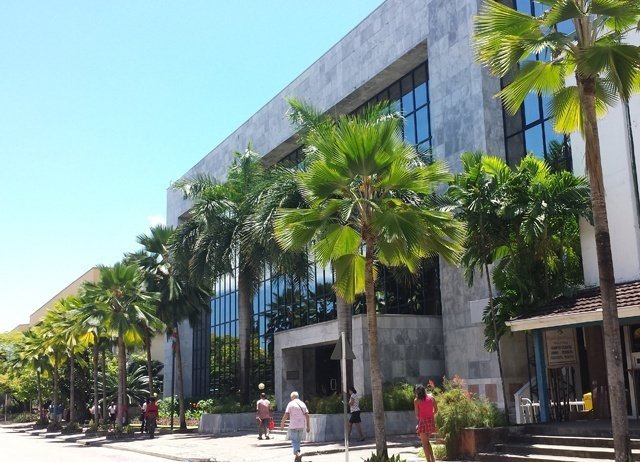
VICTORIA, Seychelles, The Seychelles Revenue Commission will tighten the ceiling on cheque payments to the tax authority over the next three years and stop accepting cheques altogether from 31 December 2028, Commissioner of Tax Gayathri Chetty said this week.
📷 Photo: Photographer for the Seychelles News Agency, via Wikimedia Commons, CC BY 4.0
The new policy, which takes effect on Monday 13 July 2026, is the clearest signal yet of the Commission’s push to move taxpayers and the Customs Division onto electronic payment rails. Maximum cheque payments accepted will fall in three steps, from R200,000 this year to R100,000 in 2027 and R50,000 in 2028. For the Customs Division the threshold is set at R50,000 from the outset.
Any payment above the ceiling must be routed through the customs pre-payment account, a direct electronic transfer, a point-of-sale payment, or another approved digital payment channel, according to the announcement made at SRC headquarters in Maison Collet, Victoria. Tax payments are to be settled into the Commission’s collection account at the Central Bank of Seychelles on Independence Avenue.
Ms Chetty said the changes were driven by the financial risks that cheque-based settlement imposes on the revenue system. Cheques, she noted, are vulnerable to fraud and theft, often clear with insufficient funds in the underlying account, and create administrative delays in processing, clearing and recovering the underlying tax liability. Cindy Blakemore, director for Inland Revenue, added that during the 2024 to 2026 period the Customs Division alone received 156 cheques that bounced after reaching the bank.
The change also lines up with a wider global shift away from paper instruments. The World Bank Global Findex database, which tracks how adults make and receive payments, has documented a steady fall in cheque use across developing economies over the past decade, with mobile money, card payments and direct bank transfers filling the gap. Small island states in particular have moved quickly because paper clearing imposes fixed costs that electronic settlement does not.
The Commission has built in a soft transition for taxpayers who find themselves racing a bank transfer at month end. Ms Chetty said the transaction date is taken when the taxpayer submits the details and proof of payment, not when the funds reach the SRC account, so a one-day delay in clearance does not push a taxpayer into late-payment territory. Proof of payment can be emailed to banktransfer@src.gov.sc alongside the tax payment slip.
Cash payments will continue to be accepted, but the Commission is urging individuals and businesses to migrate to electronic channels for speed, convenience and security. The shift is also expected to reduce the cost of collections for the tax authority, which has been modernising its service delivery over several years.
For businesses that pay large duties and taxes in a single transaction, the practical effect is that 2028 is the deadline to set up an electronic relationship with the Commission or with a partner bank. Customs brokers, importers and larger employers are likely to be the first to feel the change. Smaller taxpayers who file modest monthly obligations will see little difference in the near term, since most of their payments already fall well below the R200,000 ceiling in force this year.
Sources cited: Central Bank of Seychelles, Wikipedia. Cheque, Wikipedia. Digital payment, Wikipedia. World Bank Global Findex.
Source: SN