Government Sends 30 Civil Servants to India While Core Public Services Continue to Underperform

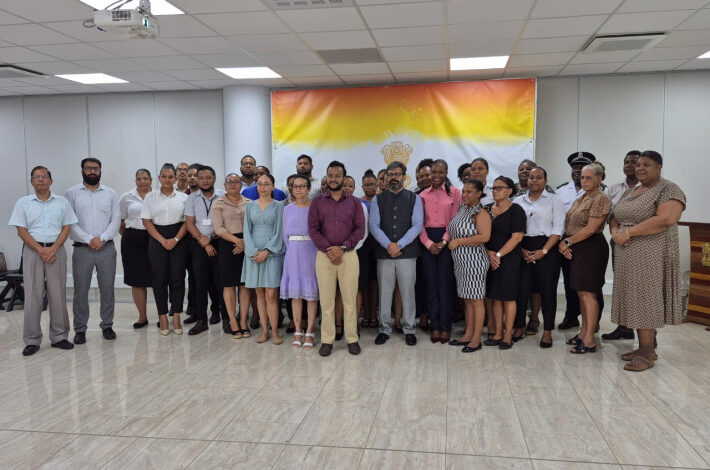
Victoria, Seychelles – Thirty Seychellois civil servants departed yesterday for a two-week capacity building programme in New Delhi, India, in what government has framed as a milestone in bilateral cooperation. The initiative, organised by India’s National Centre for Good Governance, follows a memorandum of understanding signed during President Patrick Herminie’s State visit to India in February 2026.
The ceremony at Maison Esplanade was attended by India’s High Commissioner Rohit Rathish and principal secretary for the Department of Public Administration Fatime Kante, both of whom spoke warmly of the programme’s ambitions. The agreement aims to train 250 Seychellois civil servants over five years, with this group forming the first cohort.
Participants come from a broad cross-section of government, including finance, education, the police, the judiciary, and State House. Commissioner Rathish highlighted India’s rapid economic growth, digital public infrastructure, and large-scale social programmes as the areas participants will explore.
The delegation includes Amanda Denis, director general of Human Resources and Administration at the Department of Land and Housing, and Alex Henderson, deputy cabinet secretary for Policy Affairs at State House. Both spoke positively about the opportunity, describing it as a chance to bring back best practices that improve public service delivery.
That goal, however well-intentioned, is easier to announce than to deliver. Seychellois have been on the receiving end of public service reform promises for years, with improvements in key areas – from land registry processing times to social welfare application backlogs – remaining frustratingly slow. Whether lessons absorbed in New Delhi will translate into tangible changes for the average person seeking services at government offices remains the central question that no ceremony can answer.
India’s investment in this relationship is genuine and the capacity building opportunity is real. The test will come when the 30 return home and face the same institutional inertia, resource constraints, and bureaucratic habits that hamper delivery not from lack of knowledge, but from lack of political will to enforce accountability at every level of the public service.