Seychelles Hosts SIOFA Fisheries Talks as High Seas Treaty Reshapes Ocean Governance

VICTORIA, Seychelles —
The Ministry of Fisheries, Agriculture and the Blue Economy opened the thirteenth Meeting of the Parties of the Southern Indian Ocean Fisheries Agreement at the Savoy Seychelles Resort and Spa in Beau Vallon on Monday, with government representatives, fisheries scientists and international observers gathering to shape the conservation and sustainable management of one of the world’s most ecologically significant ocean regions, as confirmed on the SIOFA meetings page for MoP13.
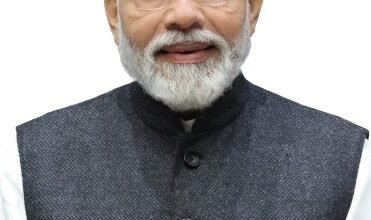
Wallace Cosgrow, Principal Minister and Minister responsible for fisheries, framed the Southern Indian Ocean as a hotspot of biodiversity and a focus of scientific interest that is also of immense importance to food security, livelihoods and economic development for many coastal and island states. He highlighted Seychelles’ particular vulnerability given its small size, remoteness and exposure to environmental change, and stressed that global crises disproportionately affect the country while underscoring its dependence on ocean resources.
The meeting is the principal decision making body of SIOFA, the regional fisheries management organisation established by an agreement signed in Rome on 7 July 2006 and in force since June 2012, the full text of which is hosted by the Indian Ocean Marine Research Centre network. Cosgrow described SIOFA as a relatively young organisation with both the opportunity and the responsibility to position itself as a forward looking body, underlining the importance of embracing science, strengthening ecosystem based management, and contributing to global efforts to conserve marine biodiversity while ensuring sustainable use of marine resources.
Agenda items reported by SIOFA include continued operationalisation of the Vessel Monitoring System, proposals for new conservation and management measures, regulation of new and exploratory fisheries, and strengthening of compliance and monitoring frameworks. A dedicated workstream covers mechanisms to meet the capacity building needs of developing states under Article 13 of the Agreement. The supporting documentation for the meeting, including budget abstracts, is published in the SIOFA MoP13 document repository.
Membership now comprises ten contracting parties, namely Australia, China, the Cook Islands, the European Union, France on behalf of its Indian Ocean territories, Japan, the Republic of Korea, Mauritius, Seychelles and Thailand. Chinese Taipei participates as a fishing entity, while Comoros and India are cooperating non contracting parties. Kenya, Madagascar, Mozambique and New Zealand are signatories that have not yet ratified.
The meeting lands against the backdrop of a major shift in high seas governance. Cosgrow pointed to the entry into force of the BBNJ Agreement, formally the Agreement under the United Nations Convention on the Law of the Sea on the Conservation and Sustainable Use of Marine Biological Diversity of Areas Beyond National Jurisdiction, on 17 January 2026, describing it as a landmark achievement that reinforces cooperation among international organisations, including regional fisheries management organisations. The agreement, according to the United Nations BBNJ Agreement portal, entered into force 120 days after the sixtieth ratification was deposited on 19 September 2025. By that point, the International Fund for Animal Welfare reported that 81 states and the European Union had ratified and 145 countries had signed the agreement. The milestone was echoed in a United Nations news story on the entry into force and in the European Commission’s oceans and fisheries bulletin.
For Seychelles, hosting MoP13 is a chance to set the table for the next phase of regional cooperation. Cosgrow’s framing was explicit on the principle that protecting ecosystems while supporting sustainable fisheries demands continued investment in science, data collection, monitoring and adaptive management, and that precaution is not an obstacle to sustainable use but the foundation upon which sustainability rests. The gathering in Beau Vallon, which runs through 10 July, will produce the conservation and management measures that govern fishing on the high seas of the Southern Indian Ocean for the coming year, and will shape how SIOFA positions itself alongside the new global architecture created by the BBNJ Agreement.
Sources cited: SIOFA MoP13 meeting page. SIOFA Agreement text. SIOFA MoP13 information document, mid year budget. United Nations BBNJ Agreement portal. IFAW on BBNJ entry into force. United Nations news on BBNJ entry into force. European Commission oceans and fisheries bulletin.
Source: SN