Seychelles has begun work with the regional maritime body MOESNA to deepen coordination on shipping costs, port governance and trade connectivity, the Ministry of Transport has confirmed, in what officials describe as part of a wider push to give small island states a stronger voice in international maritime forums.
The Minister for Transport, Ports and Civil Aviation, Veronique Laporte, met the secretary general of the Maritime Organisation for Eastern, Southern and Northern Africa (MOESNA), Kassim K. Mpaata, at Botanical House last Friday. Mpaata was accompanied by Aderick I. Kagenzi, the organisation’s director for Ports, Shipping and Maritime Services, and is in Seychelles on an official mission.
The two sides used the meeting to explore opportunities for regional cooperation, including governance, trade connectivity and cooperation among maritime state holders, the ministry said in a statement. Discussions also addressed what it described as challenges facing the sector, such as shipping costs, with Laporte welcoming the engagement and emphasising the importance of regional maritime trade for Seychelles.
MOESNA, formerly known as ISCOS before a 2022 rebrand, is an intergovernmental body with observer status at the International Maritime Organization (IMO) since 1980. Its nine core member states are Kenya, Tanzania, Uganda, Zambia, the Democratic Republic of the Congo, Ethiopia, Burundi, Botswana and Malawi, with Mozambique also listed in some MOESNA presentations. The organisation exists to coordinate regional maritime policy, support member states in implementing IMO conventions, and present a common African position in global shipping debates.
For Seychelles, the meeting is part of a wider recent push into international maritime diplomacy. Laporte, who was appointed transport minister in late 2025, has led the country’s delegation at the IMO Council elections and a series of bilateral talks, including a working visit to Saudi Arabia, the Czech Republic and other IMO member states. The ministry has also been running a National Risk Register workshop on maritime security, signalling that capacity-building work, not just diplomacy, is being pushed in parallel.
Both Laporte and Mpaata used the meeting to reaffirm a commitment to strengthening dialogue and exploring areas of mutual interest for the benefit of the maritime sector, the ministry said. The wider point was sharper than the formulaic joint language suggested. Seychelles is a flag-of-convenience state and a small open economy, so high shipping costs and any erosion of the international rules-based maritime order land directly on the country’s import bill and on the competitiveness of its tourism sector.
Several senior officials joined the meeting. Captain Daniel Adam, the chief executive of the Seychelles Maritime Safety Authority, attended alongside Pierre Prosper, chief executive of the Seychelles Ports Authority. Wilnette-Joseph, the deputy chief executive of the SMSA, was there too, as was Lynze Marimba, director of strategic business development at SPA, and Vanessa Marie, executive director to the minister. Nathanielle Soomer, the ministry’s senior international cooperation officer, was also in the room.
For Seychelles, the practical focus will be on shipping costs, port governance and the country’s position in the African Maritime Transport Charter. The 2024 African Maritime Transport Charter, which MOESNA itself helped shape, calls on regional groupings to harmonise cabotage regimes, pool investment in vessels and infrastructure, and present common positions in international maritime fora. Seychelles is one of the more open-flag jurisdictions in the region, so any move towards regional coordination on registry and maritime labour standards lands in a market where the country is already competing. The ministry’s recent National Risk Register workshop on maritime security, held in November 2025, and Laporte’s bilateral push at the IMO Council elections in London, suggest the country is now treating maritime diplomacy as a routine line of work rather than a one-off event.
The wider picture is also about geography. The MOESNA footprint covers most of the Western Indian Ocean seaboard, including the major East African ports of Mombasa, Dar es Salaam and Beira. Seychelles’ inclusion in that orbit gives the country a route into regional discussions on inland-waterway transport, port modernisation, and the kind of policy harmonisation that bigger economies can often drive on their own. MOESNA’s strategic plan for 2026 to 2031, published in 2025, sets out the agenda for that period and the ministry will now look to position Seychelles inside it.
Source: SN
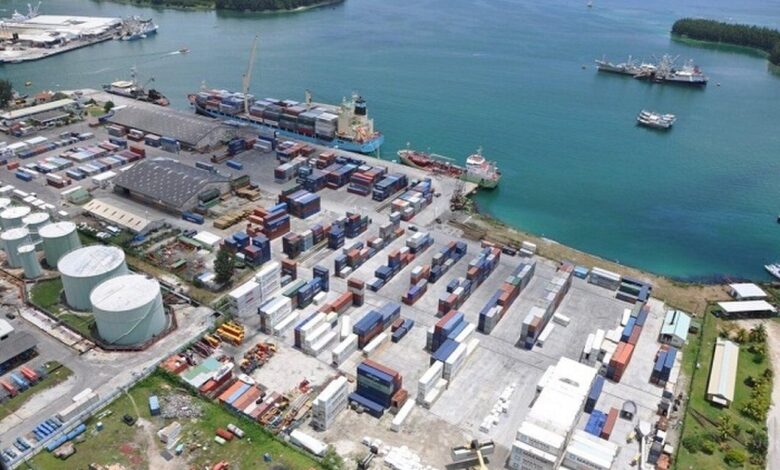
Photo: Seychelles Ports Authority, CC BY 4.0, via Wikimedia Commons.