VICTORIA, Seychelles — Francis Songoire, a former deputy commissioner of police, told the Montagne Posée prison inquiry on Wednesday that operational command of the December 2024 prison response fell to him by default, even though he reached the scene after the Public Order and Tactical Response Unit had already gone inside.
Mr Songoire was the only witness to give evidence on the inquiry’s latest sitting. The commission, chaired by Justice Alfred Mavedzenge, is investigating the events of 5–7 December 2024 at Montagne Posée prison, during which inmates Francis Ernesta and Jerry Mathiot died.
According to Mr Songoire, police command centre staff alerted him to the disturbance at around 5pm, with officers already dispatched. He drove to the prison alone and arrived shortly after 6pm. There he met briefly with Commissioner of Police Janet Georges and her deputy before joining a strategy meeting attended by Assistant Police Commissioners Ned Wirtz and Antoine Denousse, and Chief Superintendent Jemmy Bouzin. The group was later joined by Colonel Michaël Hollanda, chief of staff of the Seychelles Defence Forces, forming the joint command team.
Mr Songoire told the commission he did not know who had originally requested military assistance. He said Commissioner Georges had briefed him that inmates had set fires and were holding prison guards hostage. The riot, he added, was triggered by the placement of inmate Stephan Mondon in the dry cell.
By the time he arrived, he said, the Public Order and Tactical Response Unit was already inside. The decision to enter was not his. His understanding was that the operation’s principal aim was to return inmates to their cells and to recover a key that controlled access to a cell holding contraband in an inmate’s possession. Mr Mondon’s cell was to stay locked.
He instructed officers to negotiate with the inmates. When talks collapsed, the command team ordered an intervention. The operation ran from 10pm to 3am the following morning, with breaks. Only non-lethal weapons were deployed, and the military’s contribution was limited to securing the perimeter.
Mr Songoire acknowledged that, as the most senior officer on the ground, responsibility for the operation rested with him, although he framed his role as one of support to the prison commissioner and the wider police command. He was also pressed on the fact that the crime scene had been cleared before investigators arrived. The body of inmate Gerry Mathiot had been removed, and the scene had been attended to before any formal investigation began, a sequence he said he was not aware of at the time.
He also addressed the special Ibou team attached to State House, which has drawn scrutiny for its role in the wider security architecture. The team, he explained, carried out drug operations alongside the former Anti-Narcotics Bureau but did not sit under his command. Joint police-military operations had been routine well before the constitutional amendment that formalised them, and police always retained overall leadership of such operations. He said he had only been informed of the team’s creation and understood that its duties resembled those of the disbanded ANB.
The inquiry, established under the Commission of Inquiry Act by President Patrick Herminie on 23 March 2026, is required to deliver a final report within six months of its first sitting, with a possible extension. Hearings are being broadcast live by the Seychelles Broadcasting Corporation. A parallel joint investigation by the Ombudsman and the Seychelles Human Rights Commission is also under way and is expected to take between six and nine months.
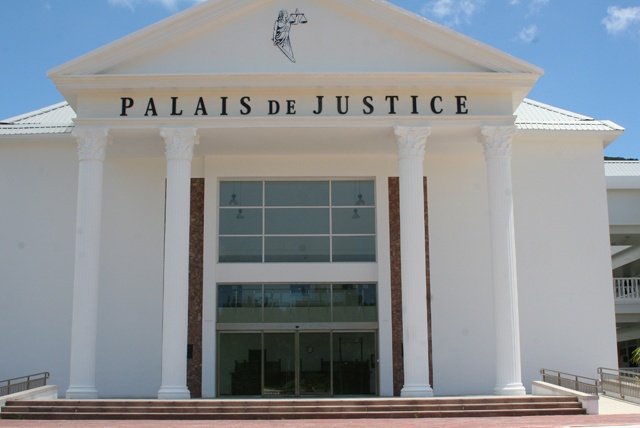
📷 Photo: Seychelles News Agency via Wikimedia Commons, CC BY 4.0
Source: SN