
Analysis – The Seychelles Times
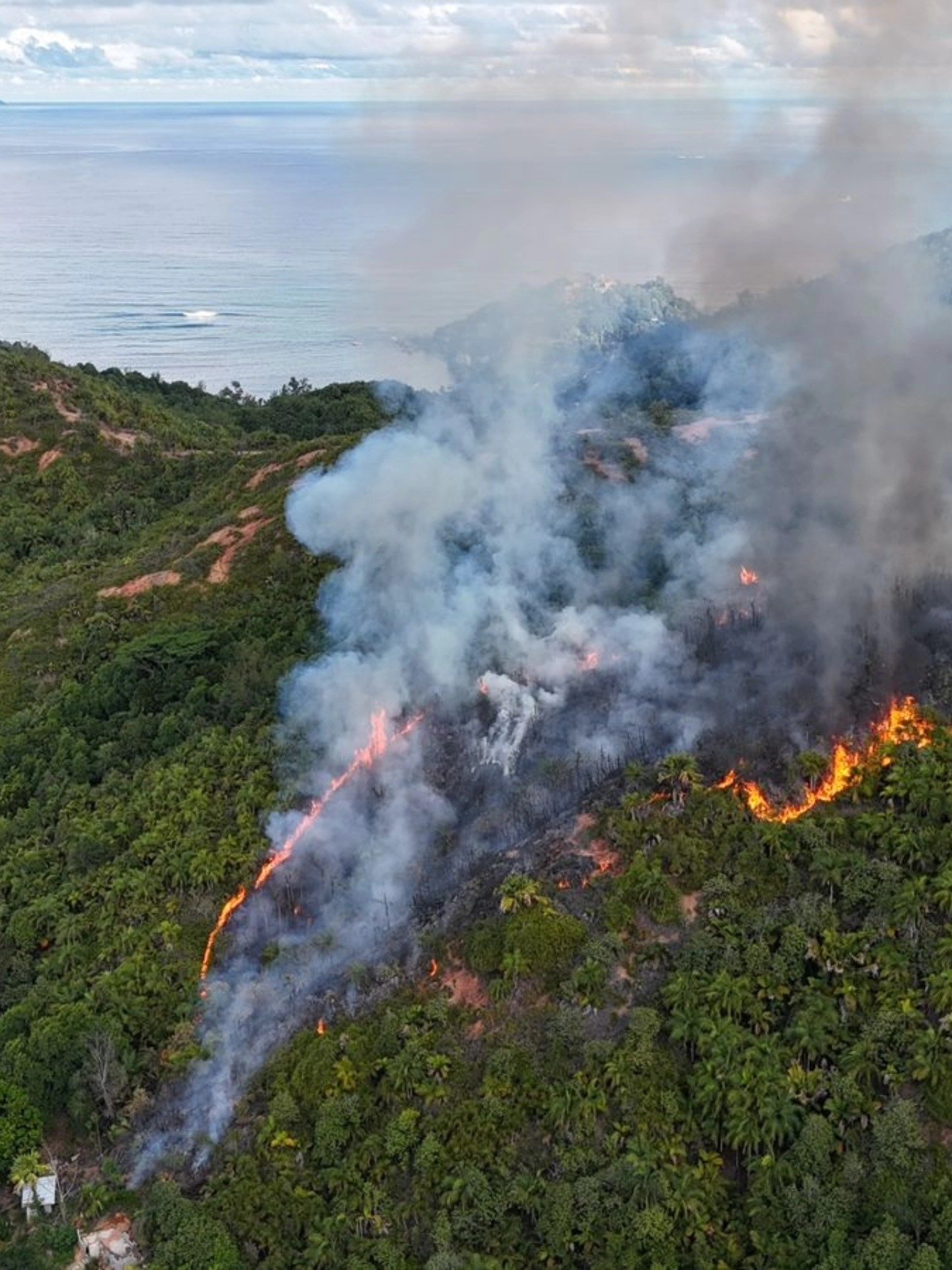
Victoria, Seychelles – The wildfire currently tearing through Praslin’s forest reserves raises an uncomfortable question that government will not want to answer this week but will eventually have to: how prepared is Seychelles, really, for a major environmental emergency on a smaller island?
The Praslin National Park and the Ravin de Fond Ferdinand are not peripheral patches of bush. They are gazetted reserves of national and international ecological significance. The endemic palms of Praslin – including the Coco de Mer – are irreplaceable. A fire that moves through that terrain unchecked does not just damage scenery; it can permanently alter ecosystems that took centuries to develop.
What emerged from reporting on the ground yesterday was a picture of a response that relied heavily on public volunteerism, improvised coordination, and terrain-dependent decision-making. That is not a criticism of the individuals involved, many of whom showed genuine courage and commitment. It is an observation about the structural gaps that forced those individuals into a position of improvisation rather than systematic response.
Seychelles has a Fire and Rescue Service and a Defence Force. It has environmental agencies and a national park. What it apparently lacks is a pre-positioned, adequately resourced, and regularly exercised wildfire response capability for its outer islands. The question of whether the correct firefighting equipment, the right volume of personnel, and a clear chain of command were available from the outset is one that deserves a formal post-incident review – not a press release.
The government’s commitment to environmental protection has been articulated through strategies, action plans, and international frameworks. The test of that commitment is not what is written. It is what burns.


