
Released: 2026-07-31
VICTORIA, Seychelles. President Dr Patrick Herminie has put the weight of his office behind a new national policy on artificial intelligence in schools, with Cabinet approving the National Artificial Intelligence in Education Framework 2026 to 2030, a roadmap that will shape how AI is introduced and used across the country’s education system over the next five years.
The framework, developed by the Ministry of Education and Human Resource Development with technical support from the World Bank, is the first comprehensive national policy of its kind in Seychelles. It sets out how AI will be brought into teaching, learning, educational leadership and school administration, and places Seychelles among a small but growing number of countries with formal national policies for the responsible use of AI in education.
The approval gives practical form to a promise the President made from his earliest days in office. Shortly after taking office, Herminie declared that his goal was to reshape Seychelles over five years, with a strong focus on science, technology and artificial intelligence. The new framework is the first step that reaches directly into the country’s classrooms, and it follows other technology commitments from his Administration, including the recent expansion of national connectivity through Starlink.
Unlike many discussions around AI that centre on the technology itself, the Seychelles framework puts teachers at the centre of the change. It recognises that AI should support, not replace, the professional judgement, creativity and expertise of educators. To make that real, the framework introduces a four level National Teacher AI Competency Framework, a mandatory AI micro credential for all teachers, and an AI Champion in every school to help colleagues bring AI into teaching and learning.
For learners, the framework introduces a progressive approach to AI literacy from primary through secondary school. Rather than creating a new standalone subject, AI concepts will be woven across the existing curriculum, so that learners can build digital, critical thinking, problem solving, creativity and ethical decision making skills that are increasingly essential.
The framework also reinforces Seychelles’ shift towards competency based education, using AI to support personalised learning, formative assessment and differentiated instruction, so that every learner gets the support needed to reach their full potential.
A defining feature of the framework is its emphasis on ethics, transparency and learner protection. The policy sets out clear safeguards on data privacy, child protection, academic integrity, cybersecurity and responsible procurement. Importantly, high stakes decisions, including final grading, certification and student placement, will remain under human oversight during the initial phases of implementation.
Implementation is already under way. Earlier this year, the Ministry, in partnership with the Commonwealth of Learning, ran a national workshop on Digital Competencies for Teachers, giving educators practical skills in the use of AI and Open Educational Resources to design digital content, create lesson plans and improve classroom practice.
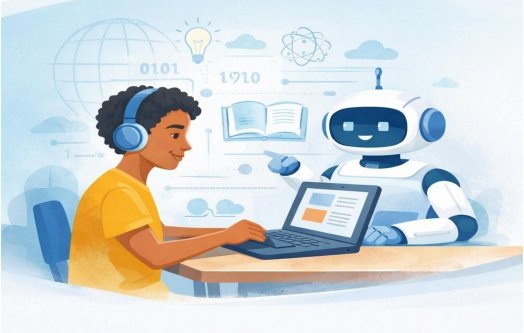
The Ministry is also running two AI pilot projects with the World Bank. The AI Teacher Coach Programme supports Primary 5 and Primary 6 teachers across six schools with AI assisted guidance to strengthen lesson planning, classroom practice and professional development. At the same time, the AI Student Tutor Programme is providing personalised learning support to Secondary 3 learners in Mathematics and Geography across four schools, showing how AI can be used to improve learner engagement and achievement while keeping teacher oversight.
A National AI in Education Steering Committee will oversee implementation, coordinate policy rollout, approve AI tools for use in schools, monitor progress and ensure compliance with national standards on ethics, quality assurance and data protection. The committee will also maintain nationally approved and prohibited AI tools lists, so that schools adopt technologies that are safe, effective and aligned with educational objectives.
Minister for Education and Human Resource Development Ambassador David Pierre framed the framework as an investment in Seychelles’ people as much as in technology. In embracing artificial intelligence with wisdom, responsibility and vision, he said, Seychelles is shaping the future of its education system and investing in the potential of its people.
As artificial intelligence continues to reshape societies and economies around the world, Seychelles is positioning itself not as a passive observer but as an active participant in deciding how these technologies can improve education. The approval of the National Artificial Intelligence in Education Framework marks the start of a new chapter in which innovation is guided by ethics, technology is driven by purpose and every teacher, learner and parent can see, in a policy now taking effect in their own schools, a presidential promise being kept.
- PUC Confirms Land Marine Electricity Account Settled, Says Discount Was Exceptional
- Seychelles Moves Toward New Gambling Commission to Replace 2014 Act
-

- Seychelles orders surrender of diplomatic and official passports held outside active service
