
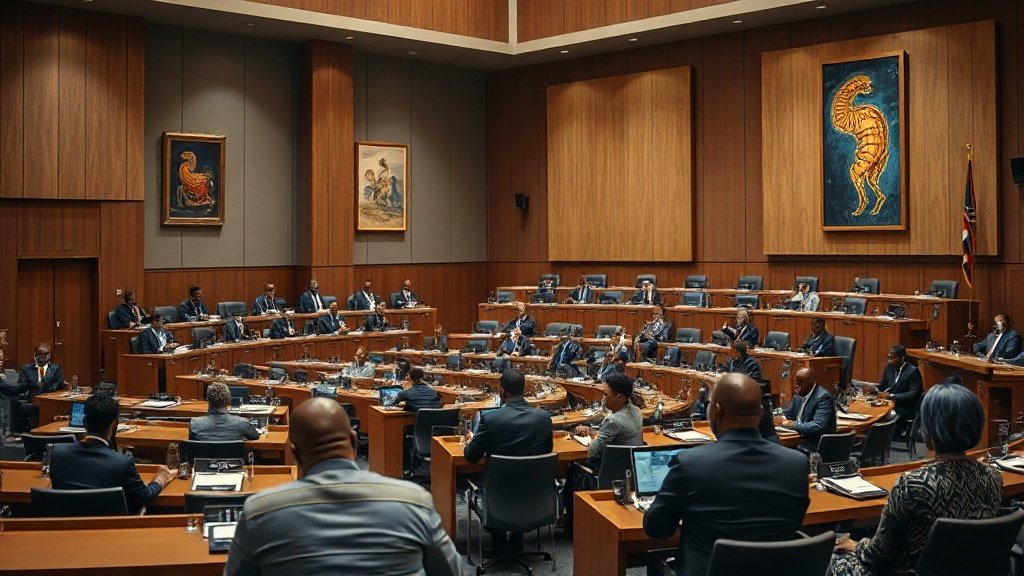
VICTORIA, Seychelles, A pioneering partnership between the SADC Parliamentary Forum and the United Nations Conference on Trade and Development concluded on 5 June after eight intensive training sessions, equipping members of parliament and parliamentary staff from across 15 Southern African Development Community countries to scrutinise the implementation of the African Continental Free Trade Area more closely.
Launched virtually in November 2025 under the theme “Strengthening the Role of Parliaments in Advancing Regional Trade Integration through the AfCFTA,” the programme brought together legislators and clerks to deepen their understanding of trade governance, investment, digital trade, gender-responsive trade policy, non-tariff barriers, and regional economic integration. The final session focused on the AfCFTA Investment Protocol, private sector engagement, regional value chains, and the persistent challenge of non-tariff barriers, or NTBs.
A major output was a draft Parliamentary Action Plan, designed to convert the training into concrete legislative, oversight, and advocacy actions at both national and regional levels. According to the SADC Parliamentary Forum media release, the plan is intended to function as a working document for the next phase of engagement, with the Secretariat coordinating implementation through the Forum’s Standing Committee on Trade, Industry, Finance and Investment.
Opening the closing session, Hon. Dumelang Saleshando, chairperson of the SADC PF Standing Committee on Trade, Industry, Finance and Investment, described the AfCFTA as “one of the most ambitious and transformative development projects of our generation.” He noted that despite the promise of regional integration, African businesses continue to face obstacles such as cumbersome customs procedures, excessive documentation, unpredictable border delays, and inconsistent standards. “For many of our traders, particularly small-scale traders, women, and young entrepreneurs, these barriers do not merely inconvenience trade, they discourage it altogether,” he said.
UNCTAD, which leads the programme through its Africa regional office, said the partnership had successfully translated complex trade issues into practical tools for parliamentarians. The agency is operating an AfCFTA support programme focused on non-tariff barriers, regulatory transparency, trade facilitation and standards, and the SADC PF training is one of its main parliamentary-facing delivery channels across the continent.
The focus on non-tariff barriers reflects a wider continental reckoning. Multiple 2026 assessments, including African Development Bank and Trade and Development Bank analysis, conclude that NTBs now account for the majority of intra-African trade costs. The African Union’s continental online NTB reporting tool, TradeBarriers.Africa, is now the main channel for traders to flag delays, ad hoc fees, and inconsistent standards across borders.
In closing remarks delivered on her behalf by Sheuneni Kurasha, SADC PF Secretary General Boemo Sekgoma said the collaboration had delivered “tangible results and a clear roadmap for parliamentary action.” She highlighted achievements including a comprehensive training curriculum, the draft action plan, foundations for new parliamentary knowledge products, and the creation of a network of parliamentarians better equipped to engage on trade policy. “Most importantly, we have built a network of empowered parliamentarians, more connected, more confident, and more equipped to engage on trade policy across all levels,” she said.
Masenate Molapo, programme manager for the Committee on Trade, Industry, Finance and Investment, said the successful completion of the first phase leaves parliamentarians across Southern Africa better equipped to champion trade reforms, oversee AfCFTA implementation, and promote inclusive economic growth benefiting women, youth, small and medium-sized enterprises, and vulnerable communities. The next phase is expected to focus on the domestication of regional and digital trade protocols in national legislation, and on pushing for mutual recognition of standards across the region.
For Seychelles, a member of both SADC and the AfCFTA, the question now is how the action plan connects to the National Assembly’s existing oversight work. Officials tracking the file say the Commission on Foreign Affairs, Trade and Investment is expected to use the draft plan as a reference when reviewing domestic implementation of AfCFTA commitments and any new trade-related legislation in the coming year.
Sources cited: SADC Parliamentary Forum. UNCTAD Support to the AfCFTA programme. SADC Parliamentary Forum media centre. TradeBarriers.Africa continental NTB tool. African Development Bank analysis: non-tariff barriers replacing tariffs.
Source: SN


