
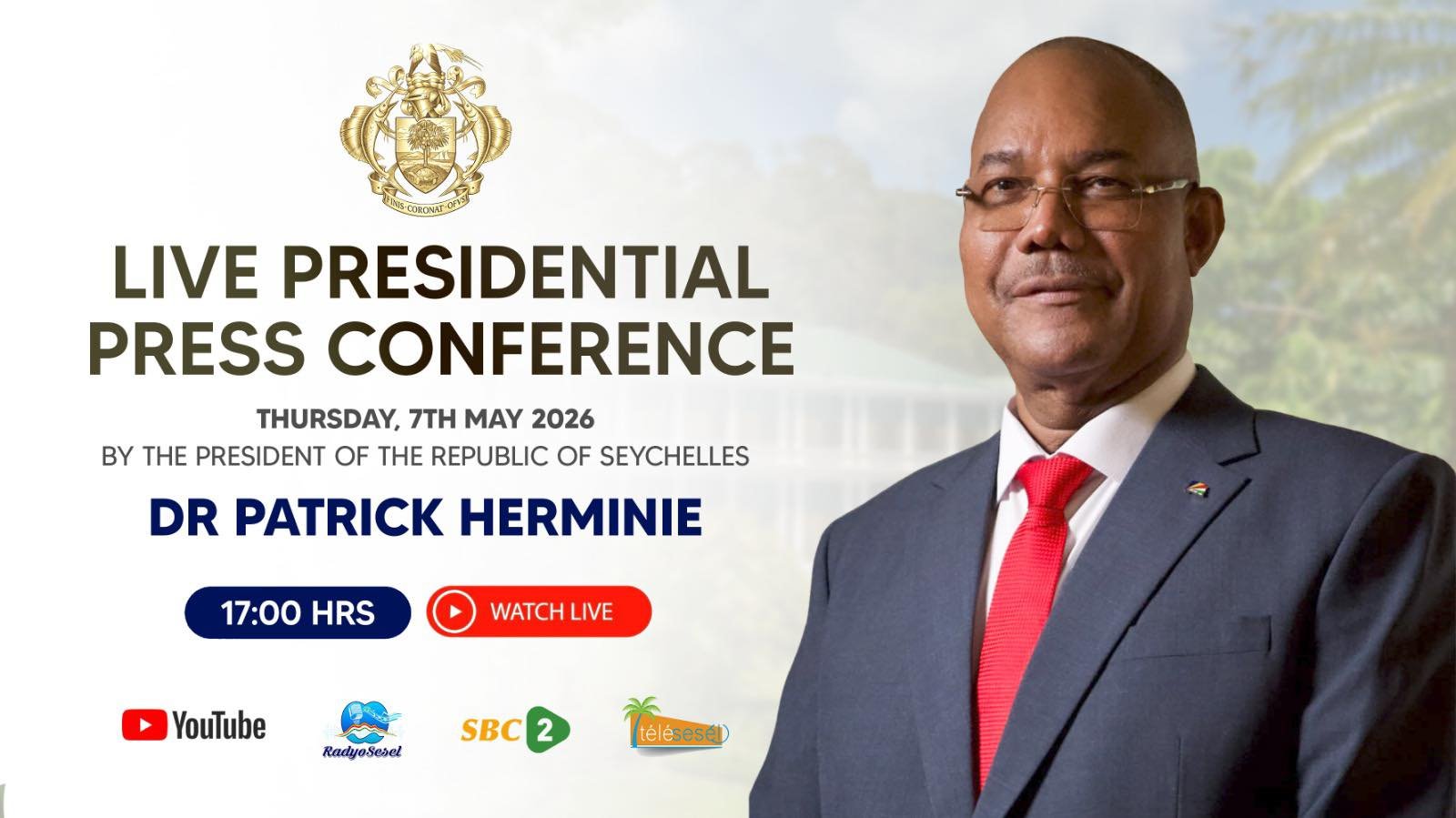
VICTORIA, Seychelles — The Speaker of the National Assembly of Mauritius, Hon. Shirin Aumeeruddy-Cziffra, has paid a courtesy call on President Patrick Herminie to discuss parliamentary cooperation, with particular attention given to Mauritius’ initiative to introduce Mauritian Creole as a language of debate in the National Assembly. The Mauritius Creole parliament initiative was inspired in part by the experience of the National Assembly of Seychelles in making parliamentary proceedings more accessible to citizens.
During the discussions, Speaker Aumeeruddy-Cziffra briefed President Herminie on the initiative, which aims to allow parliamentary debates to be conducted in Mauritian Creole so that proceedings can be more easily understood by the wider public. She noted that implementing this proposal would require the necessary legal and procedural adjustments, including amendments to the Constitution and revisions to the Standing Orders of the National Assembly.
The meeting provided an opportunity for both sides to exchange views on legislative matters and share experiences from their respective parliamentary systems. President Herminie, who previously served as Speaker of the National Assembly of Seychelles, reflected on his experience in parliamentary leadership and governance, and welcomed continued dialogue between the two legislatures.
The discussions also touched on the importance of inclusive representation in democratic institutions. Speaker Aumeeruddy-Cziffra commended Seychelles for its high representation of women in the National Assembly and for the significant roles women occupy in leadership positions across government.
The courtesy call underscored the close cooperation and mutual respect between the legislative institutions of Mauritius and Seychelles, as well as the shared commitment of both countries to strengthening democratic governance, parliamentary practice, and citizen engagement.
Mauritius follows Seychelles’ example in making parliamentary proceedings more accessible through Creole language.
-
-
-
-


