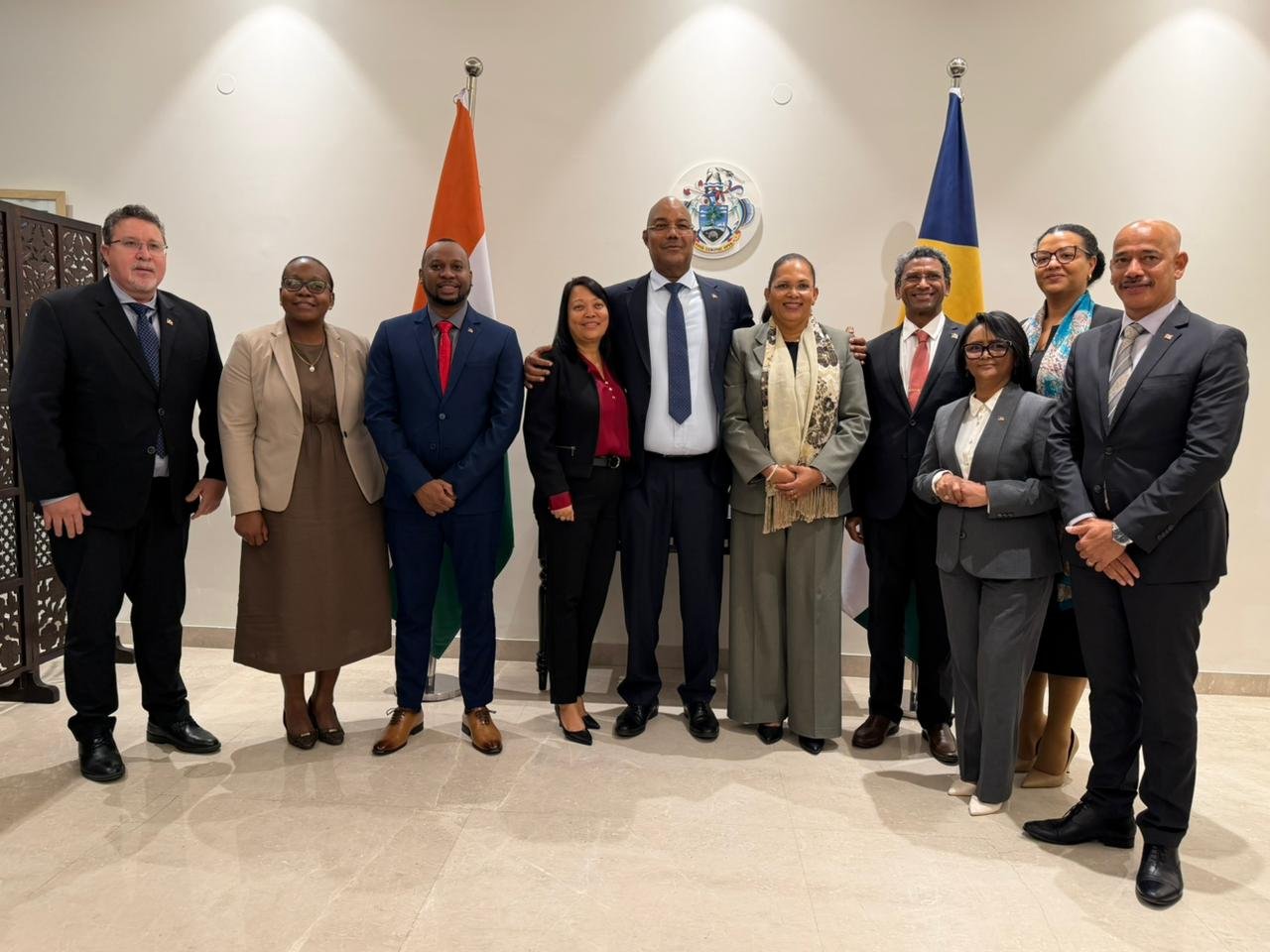
VICTORIA, Seychelles — The three-day Tropical Cyclone Committee Meeting for the Southwest Indian Ocean opened at the Savoy Resort and Spa on Monday, bringing together more than 15 member countries to review achievements and challenges, strengthen coordination, and improve the tropical cyclone warning system for the region.
The biennial meeting, which serves as a vital platform for collaboration and knowledge sharing among meteorological agencies, will aim to reduce the loss of life and property damage from cyclones and related hazards. In her opening remarks, the representative from the World Meteorological Organisation (WMO), Anne-Claire Fontan, commended the region’s continued efforts to improve preparedness and resilience in the face of increasingly severe weather events.
Minister for Agriculture, Climate Change and Environment, Flavien Joubert, noted that in Seychelles, inner islands are rarely struck directly while outer islands remain very much exposed. He added that cyclones do not respect borders, and therefore all share the same responsibility to act together. ‘This is why the tropical cyclone committee for the southwest Indian Ocean established in 1973 remains so important. It provides a platform for collaboration and solidarity,’ he said.
Chairperson of the Tropical Cyclone Committee, Celine Jauffret, noted that during the last cyclone season, 12 out of 15 member countries were affected by destructive cyclones, while others experienced indirect impacts. The meeting is also when participating countries choose the names of the upcoming cyclones, and examines how Artificial Intelligence (AI) can be used for predictions, with the regional tropical centre in Reunion already employing AI for forecasting.